
A staffer pretending to be 15 logged onto an online gaming site and began placing bets. For days, nothing stopped him. No warning, no verification, no barrier. Only after he won a $75 gift card did the platform ask his age.
For New York State Senator Joseph Addabbo Jr., the episode crystallized what he sees as a dangerous gap in oversight.
“It is gambling,” he told ReadWrite. “Whenever an individual has an opportunity of putting up money with the potential of gaining money… that’s gambling.”
But the more revealing part of his argument comes after that. The problem, as he sees it, is not simply that prediction markets exist. It is that they are already operating, expanding, adapting, and in many cases, outpacing the state’s ability to control them.
“It’s not a question of if it happens… it’s a question of when,” he said. “We just can’t sit back and wait.”
Addabbo and the prediction markets argument inside New York
Across the country, prediction markets have triggered a familiar regulatory reflex i.e. investigate, warn, sue. In New York, Attorney General Letitia James has raised alarms about the risks these platforms pose, particularly when they begin to resemble sports betting during events like the Super Bowl. The concern is that products framed as financial tools may carry the same addictive dynamics as gambling without the same safeguards.
Lawsuits! … Lawyers are very busy and making some money… I just think it doesn’t help the people.
Sen. Joseph Addabbo Jr.
At the same time, companies like Kalshi are fighting back. The platform has sued the New York Gaming Commission, arguing that its contracts fall under federal commodities law and are therefore beyond the reach of state gambling regulators. Similar legal challenges in other states suggest a strategy of settling the question of jurisdiction issues once and for all.
The result is a familiar standoff as states such as Michigan, Nevada, and Arizona assert authority, companies invoke federal oversight, and courts are then left to decide.
Addabbo, however, is not convinced that this approach will work.
“Lawsuits! … Lawyers are very busy and making some money,” he said. “I just think it doesn’t help the people.”
Caught in the middle is Addabbo’s legislation, Senate Bill S9414, which attempts to impose order on what he sees as a fast-moving and largely unregulated space.
The limits of enforcement
What makes his position unusual is not that he sees risk in prediction markets, but that he sees risk in the state’s response to them.
Platforms, he argues, are simply too adaptable for enforcement alone to keep pace.
“They know how to deal with a lawsuit… they also know how to proliferate into a state… and yet they’re doing it anyway,” he said. “They’re very savvy.”
It is a striking admission that legality and control have begun to diverge. A product can be restricted, challenged, even declared unlawful and still spread.
From that perspective, lawsuits begin to look less like a solution and more like a delay.
Addabbo says to bring prediction markets in to the New York fold
Addabbo’s alternative is to pull prediction markets inside the system and to regulate them before they become too entrenched to shape.
“To ban something is easy,” he said. “To regulate it… is the harder thing to do but the better thing to do.”
That instinct reflects New York’s recent experience with gambling. In 2022, the state legalized mobile sports betting, creating one of the most tightly controlled, and heavily taxed, markets in the country. The logic was that if people were already betting, then it was better to regulate it, capture revenue, and impose safeguards.
The system now generates billions, but it also creates a new problem. Alongside licensed operators paying a 51% tax rate, unregulated platforms have begun offering similar products without the same obligations.
“We have licensed platform providers… who pay a lot of money to New York state,” Addabbo said. “So if anyone else comes in… not being regulated, it becomes problematic.”
The inevitability argument
Underlying all of this is a belief that the market is growing unavoidably.
Every year the state delays action, Addabbo argues, it loses twice: “Every year that we don’t do it, we lose about a billion dollars to other states and the illegal market,” he said. “But also we lose that extra year of helping… somebody who has a possible addiction… and we lose that capability if we don’t regulate.”
This dual argument, economic and social, is a shift from traditional gambling debates. The question is no longer whether to allow these products, but whether the state can afford not to shape them.
The structure of control
Senate Bill S9414 is Addabbo’s attempt to do just that.
The legislation defines prediction markets as platforms where users take “a speculative position on the outcome of future events,” then subjects them to a framework that closely resembles gambling regulation. It would impose age limits, require addiction safeguards, and mandate active monitoring of risky behavior.
At the same time, it draws sharp boundaries. Entire categories of markets, including thosetied to elections, deaths, disasters, financial securities, and sports, would be prohibited.
The approach is intentionally narrow.
“I think you start strict and then you grow,” Addabbo said.
It is, in effect, an attempt to slow a fast-moving industry down long enough for the state to understand it.
The sweepstakes warning
Part of the urgency behind the bill comes from the senator’s recent efforts to shut down sweepstakes casinos operating in New York.
“Last year… we banned sweepstakes casinos in New York state,” he said, pointing to the same type of test in which a minor was able to access gambling-like games online.
This experience reinforced his concern that loosely regulated digital platforms can expand quickly while slipping through legal gaps. He suggests that by the time authorities act, those services may already be widely used.
Sweepstakes casinos, which offered gambling-style experiences without falling neatly under existing laws, became a clear example of that dynamic. Addabbo sees prediction markets as potentially heading down a similar path—only faster, and with more at stake.
The coordination problem
If the bill represents a clear vision, its path forward is less certain.
Addabbo describes a fragmented landscape within the state itself, one that mirrors the general national debate.
“I need my governor… I need our Gaming Commission… I need the Assembly… to come together,” he said.
Until then, New York remains caught between two approaches: regulate the market into compliance, or fight it through the courts.
In the end, courts may ultimately determine whether states have the authority to regulate prediction markets at all. Companies will continue to test those limits. And users, for the most part, will continue participating regardless.
“Let’s not be naive: it’s growing every day,” Addabbo said.
What he is apparently proposing is that bringing prediction markets inside the system, taxed, monitored, constrained, is more effective than trying to keep them out.
Because if the state waits for clarity, he suggests, it may find the market has already moved on without it.
“We just can’t sit back and wait.”
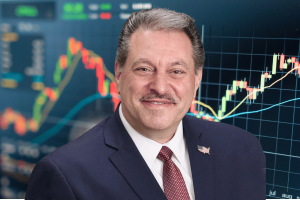
Featured image: Senator Joseph Addabbo Jr via New York Senate
The post New York doesn’t want to sue prediction markets—it wants to absorb them appeared first on ReadWrite.